
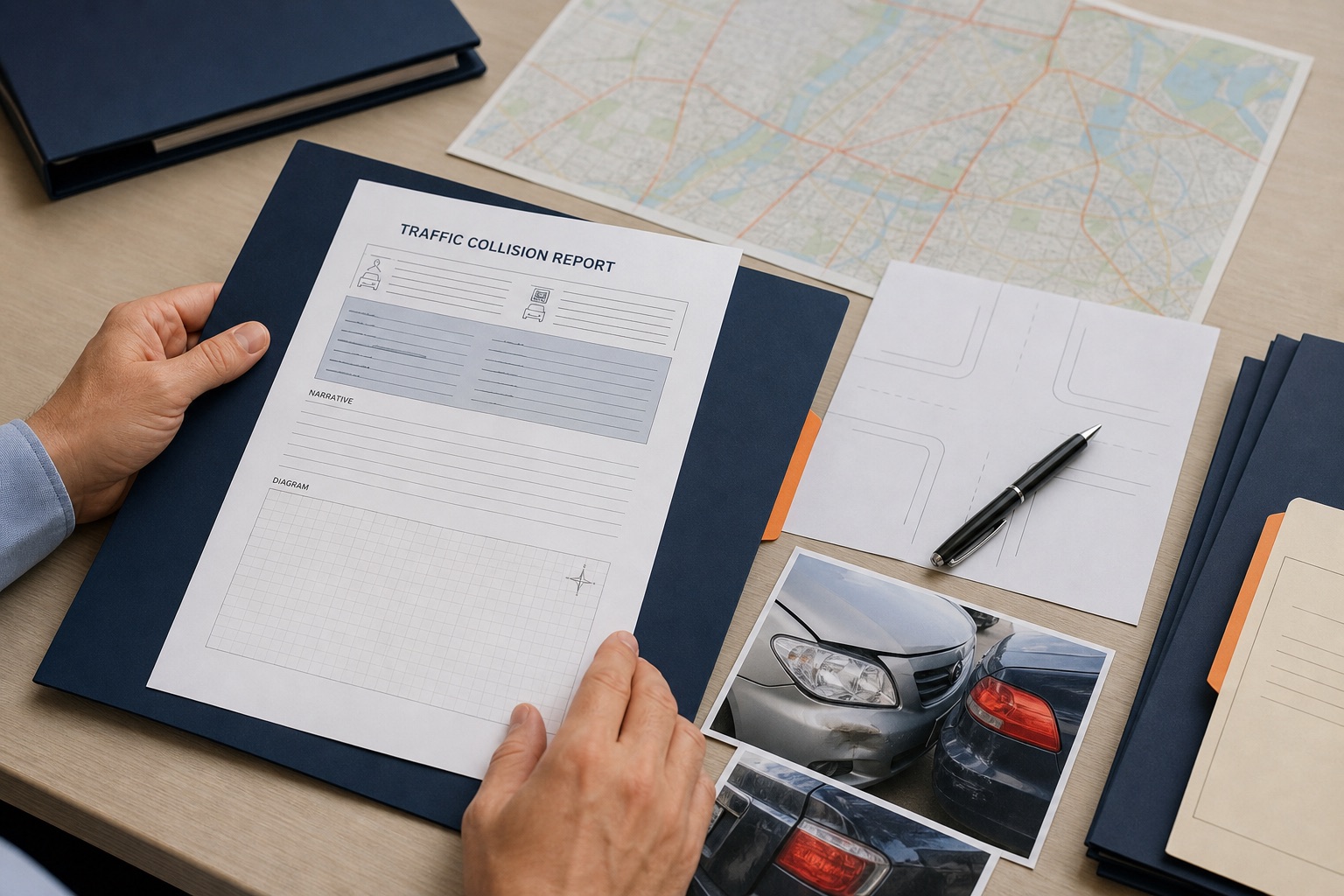
A collision police report can become an important reference after a crash, but it is not the same as an insurance decision or a final determination of legal responsibility. The report records information gathered by the investigating agency at a particular time. Knowing what it may contain, where to request it, and how to review it can make later conversations with insurers, repair facilities, medical providers, and attorneys more organized.
What a collision report may include
Formats vary by agency and state. A report commonly identifies the date, time, location, road conditions, involved drivers, passengers, vehicles, owners, insurance information, witnesses, injuries reported at the scene, citations, diagrams, photographs, and the officer’s narrative. It may also include codes or abbreviations that are not obvious to a reader.
Later medical symptoms, additional witnesses, surveillance video, repair findings, and corrected insurance information may not appear in the initial report. For that reason, keep your own records instead of relying on the report as the complete history of the event.
Identify the investigating agency first
Request the report from the agency that investigated the collision. In California, that may be the California Highway Patrol, LAPD, a county sheriff’s department, or another city police department. In Texas, a city police department, sheriff, constable, or state law-enforcement agency may investigate, while TxDOT serves as custodian for qualifying Texas Peace Officer’s Crash Reports.
Look at the exchange-of-information card, incident number, tow paperwork, citation, or officer’s business card. If the agency is unclear, contact the non-emergency line for the jurisdiction where the crash occurred and provide the date, approximate time, and location.
Information commonly needed for a request
Before starting an online, mail, or in-person request, gather the report or incident number if available; collision date and time; exact or approximate location; names of involved people; vehicle descriptions or plate information; your relationship to the incident; government-issued identification; and payment information. A representative may need written authorization or proof of authority.
Access is not always open to everyone. Collision reports can contain private information, and agencies may limit release to involved people, owners, insurers, authorized representatives, or other eligible requesters. Redactions are common. Use only an official government page or a vendor linked by that agency.
California and Texas request paths
For a CHP-investigated crash, use our CHP collision report guide. Los Angeles crashes handled by LAPD are covered in the LAPD report guide. County cases are addressed in the sheriff’s report guide, and other city agencies in the local police report guide.
Texas users can purchase eligible CR-3 reports through the official TxDOT crash reports page. TxDOT says reports are confidential and not available for general public viewing, but qualifying requesters can purchase regular or certified copies through its online system.
How to review the report
Check names, vehicle information, insurance details, date, time, location, direction of travel, passengers, witnesses, diagram, and narrative. Separate a true factual error from an interpretation you disagree with. Do not write on the original. Create a list of concerns and preserve documents that support them.
If information is wrong or missing, ask the issuing agency about its correction or supplemental-report procedure. An officer may decline to change an opinion, but the agency may accept documentation or an additional statement under its rules. Keep a record of what you submitted and when.
Protect the report and related records
Police reports can contain birth dates, addresses, license numbers, telephone numbers, insurance data, and medical details. Store copies securely. Redact unrelated identifiers before sharing a report for general review, and use a secure channel when a complete copy is necessary.
Continue with our online collision report request guide and information about insurance company claims.
General educational information only. Procedures, eligibility, fees, and processing times change; verify current instructions with the investigating agency.